Search:

Publications

Publications may be purchased in person at the Balmain Watch House when Balmain Association volunteers are there – Saturdays between 11:30am and 3:00pm and Tuesdays between 11:00am and 1:00pm. Holiday periods excepted.
Please click Google Search – Balmain Watch House hours to check.
Publications may also be ordered by email for delivery by Australia post.
Please download the Publication Order Form. The form provides details of pricing, postage and handling costs and payment methods.
$50.00
+$12.95 postage
New Publication
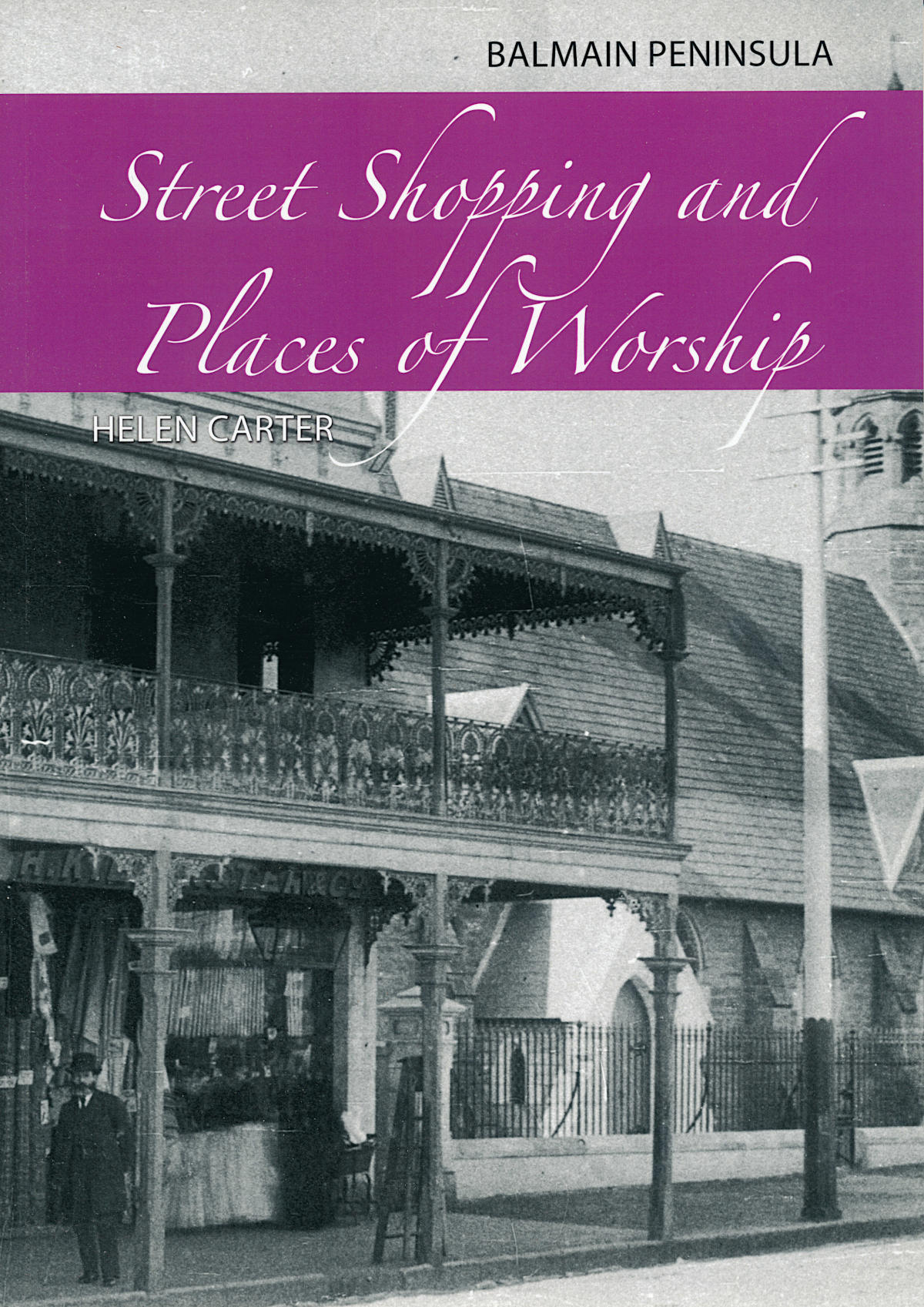
Balmain Peninsula – Street Shopping and Places of Worship
Helen Carter, 2025.
This excursion into Balmain, Birchgrove and Rozelle, the third in Helen Carter’s trilogy, will delight you. It takes you on a retail and spiritual journey commencing with the earliest corner store and its first church, St Mary’s Anglican at East Balmain and concludes with the community’s obsession with online shopping today.
Readers will discover which shopkeepers sold the popular Crispin Boot, the Good Weed, the Singer Sewing Machine and learn that Lewy Pattinson (Soul Pattinson) began in Balmain and a Prime Minister had a shop in Beattie Street! Stunning historical photographs uncover a variety of architectural styles and the wonderful leadlight windows of the churches depicting biblical narratives act as a backdrop to the spiritual, social and community services provided by their Minister.
Be quick to get your copy as limited numbers remain.
Soft cover, A4 format, 140 pages in colour, 2025.

$65.00
+$12.95 postage
New Publication
Miss Rose Adcock & Her Portable Iron Houses of
Snails Bay
Dr. Ray Stevens, 2025.
This important work by local conservation architect Dr. Ray Stevens began with the accidental discovery of a photograph of a curious house in Birchgrove. So the question came to mind, ‘what is this place and how did it come to be here?’
It turns out that the house was one of two originally located on Ballast Point Road, but it had actually been relocated. The two houses were erected by a young woman called Miss Rose Adcock. What circumstances, family relationships and personal character collided to motivate a young unmarried woman, born in Birmingham but living in Paris and aged only 23, to travel to a colonial settlement in Sydney and become an entrepreneurial property speculator and developer?
This story examines the physical and historical information on the pair of portable iron houses, which are likely the rarest examples in the world of portable houses by the maker Edward T. Bellhouse & Co. from Manchester.
Soft cover, A4 format, 334 pages in colour, 2025.
$10.00
+$7.50 postage
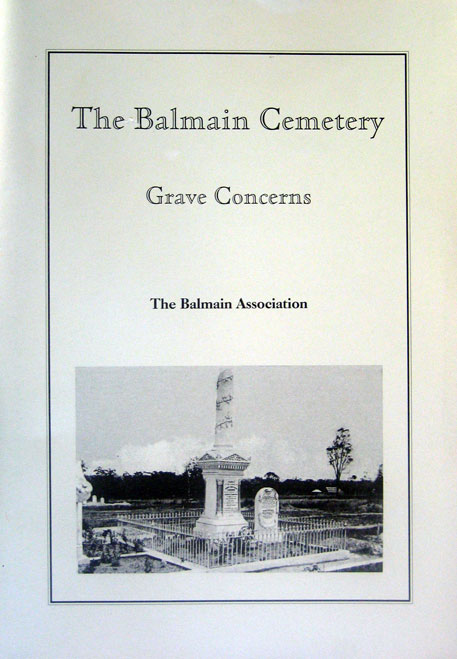
Balmain Cemetery, The
Grave Concerns
Bonnie Davidson and Kathleen Hamey, 1999.
The importance of the Balmain Cemetery has been little appreciated in the past except by the family historian, who, when obtaining the death certificate of an ancestor, would find under place of internment – the Balmain Cemetery.
Where was this cemetery that accepted 10,608 burials from 1868 until its closure in 1912.
It is with regret the historian is told the sorry tale of neglect and vandalism of the headstones, when the Cemetery area in Norton Street Leichhardt became Pioneer Memorial Park in 1941.
Read about the efforts of historian Percy Gledhill who rescued and relocated sixteen memorials in the 1940s, find out where many of the headstones went and why the Balmain Cemetery is in Leichhardt.
Soft cover, A4 format, 51 pages, 1999.

$4.00
+$3.40 postage
Balmain History Trail
Commemorative Plaques
Sixty three commemorative plaques were installed on buildings of note in Balmain and Birchgrove as a Bicentennial Project by members of the Balmain Association and the Rotary Club of Balmain.
The booklet provides details of each plaque and a map tracing the location of each starting from Darling Street ferry wharf in East Balmain and winding through Balmain and Birchgrove to Mort Bay Park.
Soft cover, 10 pages, 1992.

$20.00
+$4.50 postage
Balmain Hospital, The History of
Featuring Anecdotes and Art Work by Jan Wood
Jan Wood, 2023.
The History of Balmain Hospital touches on the social, political, technological and medical changes since 1885 when a new awareness of the importance of hygiene and sanitation became aligned with technology.
Balmain Hospital is a microcosm of what was happening in the wider world from hygiene, the moving away from paraffin and gas lighting to the advent of electricity in 1910, the installation of the telephone and the provision of the latest technology in X-Ray machines in the early 20th Century.
This brief history touches on world events, the Bubonic Plague in 1900, WW1, the Spanish Flu epidemic of 1918, the Great Depression, WW2 and AIDS.
So Many changes over the lifespan of Balmain Hospital, but one thing stays constant, the dedication of our healthcare workers, particularly our nurses.
Soft cover, A5 format, 124 pages in colour, 2023.

$55.00
+$12.95 postage
Balmain Peninsula – Death by Demolition
Helen Carter, 2022, with preface by Ray Stevens.
This remarkable 116 page book, now with a pull out map, traces the history of demolished houses in the Balmain area (Balmain, Birchgrove and Rozelle) from its earliest house built c 1815 to an inter-war bungalow recently demolished in November 2021.
The 50 specific examples and 5 buildings, accompanied by a small history of who lived in these houses until their demise, vary from a marine villa to the humble iron house.
It opens with the premise that the demolition of the houses was a crime although it soon becomes clear that there were various reasons for their destruction. What makes this publication interesting is the inclusion of photographs, advertisements and plans that give us evidence of the what type of structure existed, their internal details and who were their owners or occupants. A snap shot of life in a unique and early Sydney suburb in the 19th and 20th century.
The first edition of Death by Demolition did not include a pull out location map. To download the map click here


Soft cover, A4 format, 116 pages in colour, July 2023 (3rd edition).

$55.00
+$12.95 postage
Balmain Peninsula – Industrial Vandalism?
The rise and fall of its early industries
Helen Carter, 2023.
This book contains a collection of heavy and light industries that operated on the Balmain Peninsula (Balmain, Birchgrove and Rozelle) during two phases of its industrialisation (Phase 1: 1850s-1900; Phase 2: 1901- 1950s). It traces the European damage to the First Nations environment, the fallout from the heavy industries, the utilitarian products from the 20th century and ends with Balmain’s de-industrialisation.
Discover, images of these long forgotten industries, the rise of the Labor Party and the effect they had on the development of a unique community that was valued and looked after its workers. A pull out map allows the reader to discover just where these 68 industries existed.
Soft cover, A4 format, 116 pages in colour, 2023.
$50.00
+$12.95 postage
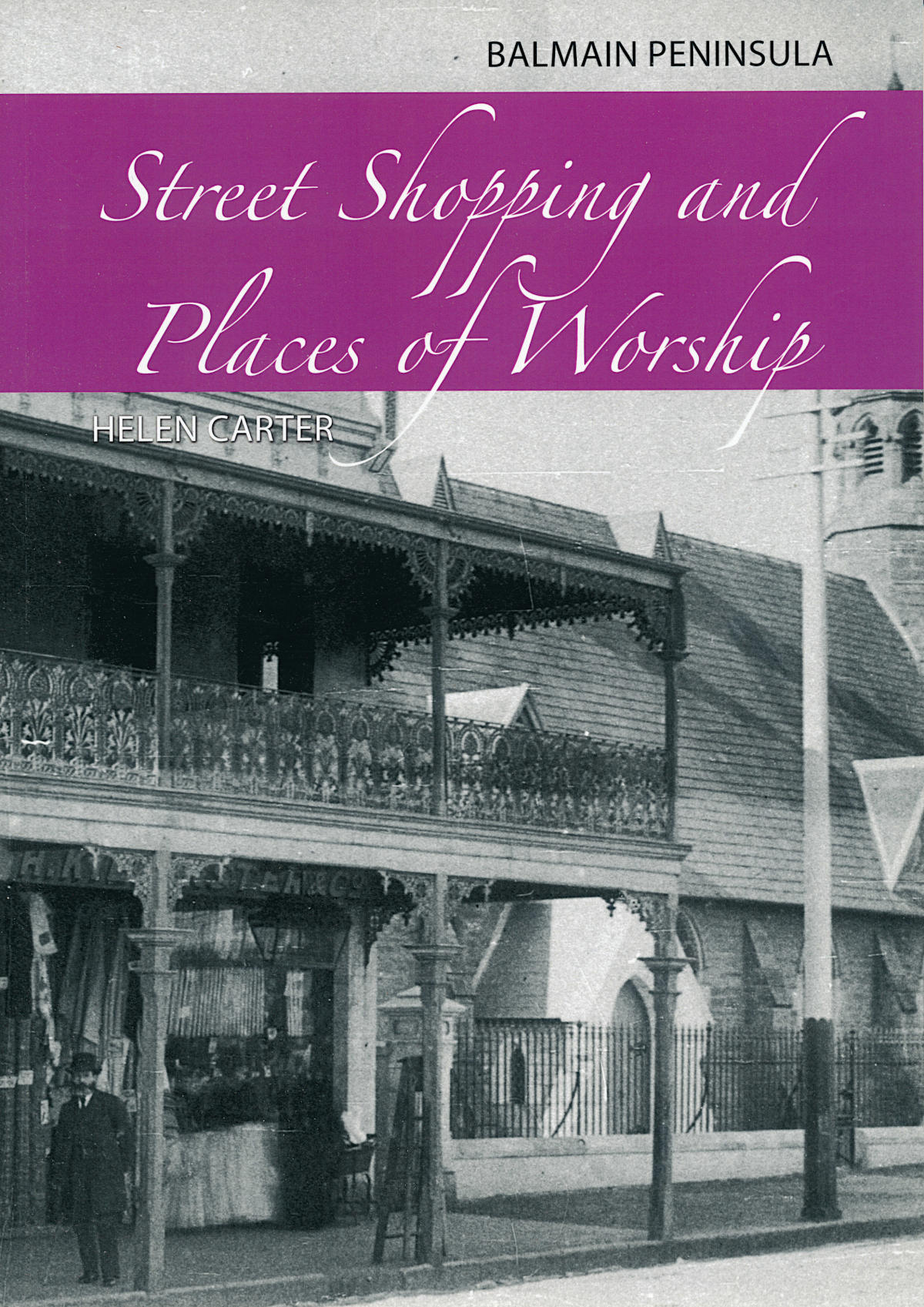
Balmain Peninsula – Street Shopping and Places of Worship
Helen Carter, 2025.
This excursion into Balmain, Birchgrove and Rozelle, the third in Helen Carter’s trilogy, will delight you. It takes you on a retail and spiritual journey commencing with the earliest corner store and its first church, St Mary’s Anglican at East Balmain and concludes with the community’s obsession with online shopping today.
Readers will discover which shopkeepers sold the popular Crispin Boot, the Good Weed, the Singer Sewing Machine and learn that Lewy Pattinson (Soul Pattinson) began in Balmain and a Prime Minister had a shop in Beattie Street! Stunning historical photographs uncover a variety of architectural styles and the wonderful leadlight windows of the churches depicting biblical narratives act as a backdrop to the spiritual, social and community services provided by their Minister.
Be quick to get your copy as limited numbers remain.
Soft cover, A4 format, 140 pages in colour, 2025.
$60.00
+$12.95 postage
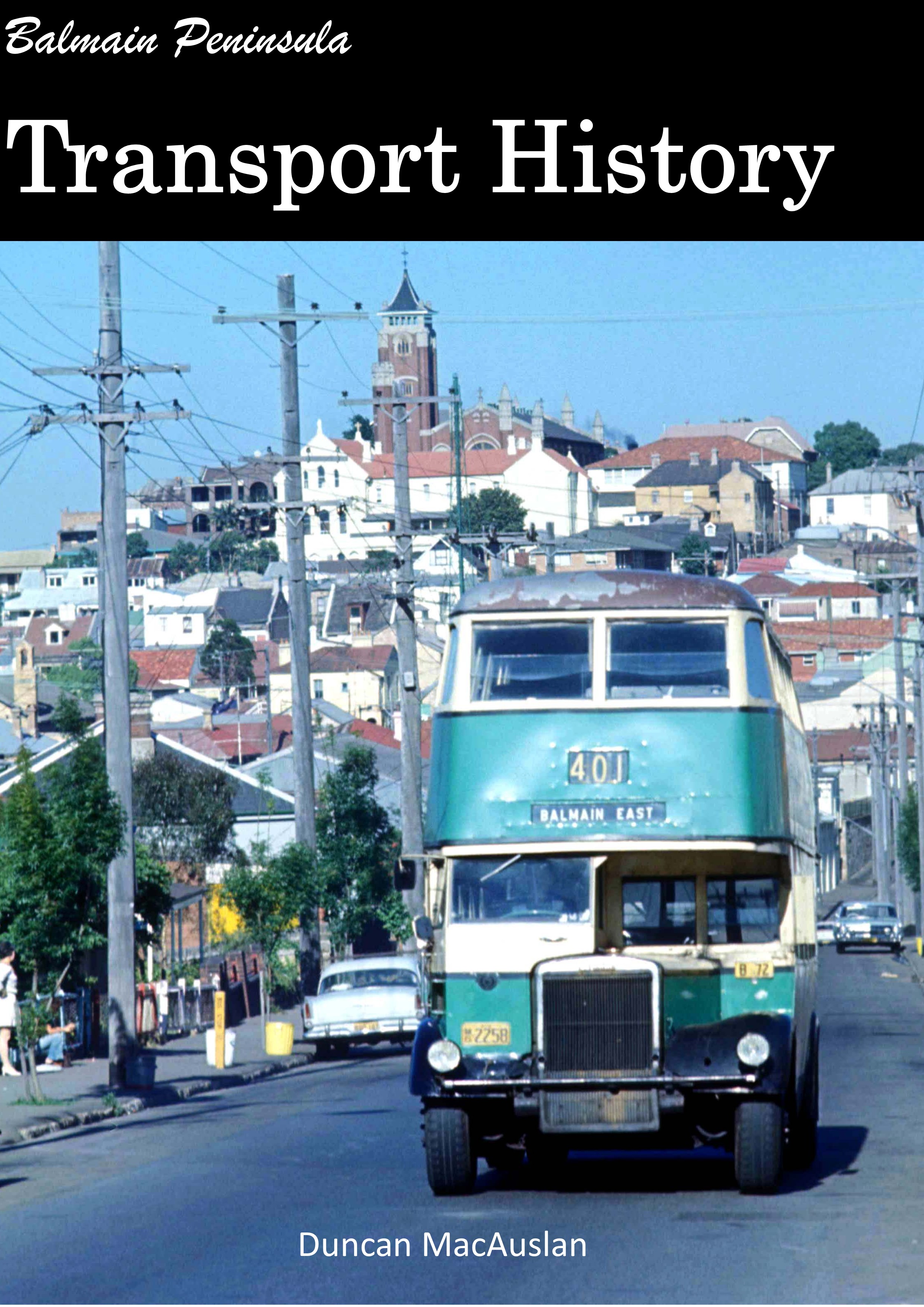
Balmain Peninsula Transport History
Duncan MacAuslan, 2016.
Balmain Peninsula Transport History provides a fascinating insight into the ferries, trams, railways, horse and motor buses of a bygone era. From the early days watermen rowed residents from Millers Point to wharves at the east end of the peninsula. As the population grew the watermen formed a ferry company under the control of the Perdriau family which in the 1880s became the Balmain Steam Ferry Company providing services to wharves on both the north and south sides of the peninsula. Duncan’s book takes us on a journey from the days of those very early ferries and horse drawn buses, through the era of tram
Balmain Peninsula Transport History is published by the Balmain Association.
This edition has been updated to cover changes and new material has been added.
Soft cover, A4 format, 136 pages in colour, 2025 (2nd edition).

$8.00
+$3.40 postage
Balmain Places 1
Mort’s Dock
Peter Reynolds, 1985.
Revised and redesigned, Duncan MacAuslan, 2022.
Mort’s Dock – Origins and Changes.
Mort Bay was called Waterview Bay. At the head of the bay was the mouth of a small stream which ran down from the Balmain Hill through the valley of Strathean. On its way the stream collected in pools which came to be known as Curtis’ waterholes – an important source of fresh water in the days before corrugated iron tanks and piped water supply.
This booklet traces the history of the area and Mort’s Dock from this time through its various owners and operations to its closing in the 1960s.
Soft cover, A5 format, 12 pages, 2022 (2nd edition).

$8.00
+$3.40 postage
Balmain Places 2
Balmain Coal Mine
Peter Reynolds, 1986.
Revised and redesigned, Duncan MacAuslan, 2022.
The Coal Mine – Under the Harbour.
Sydney Harbour was a bustling port in the second half of the 19th century with Balmain a centre of maritime industry. Many waterfront activities, for example Morts Dock, repaired and built ships which relied on coal as a source of power.
In the 1890s Balmain was declining as a pleasant place to live. Another heavy industry would accelerate its decline – the coal mine.
Below Sydney harbour, the Bulli coal seam swept along the coast between Newcastle and Wollongong about 950m below sea level. To tap this seam within Sydney harbour would eliminate transport cost, provide a local supply of coal, and allow ships to be loaded for export.
This booklet provides details of the mine shafts, their construction and operation and the impact on the community through to the sealing of the shafts in 1945.
Soft cover, A5 format, 16 pages, 2022 (2nd edition).

$8.00
+$3.40 postage
Balmain Places 3
Gladstone Park
Peter Reynolds, 1986.
Revised and redesigned, Duncan MacAuslan, 2022.
Gladstone Park – The Pigeon Ground.
Beneath Gladstone Park lies the old Balmain reservoir. Before the Park was thought of, the place was known as the Pigeon Ground. In earlier days pigeon shooting took place on land opposite the Town Hall. Later the principal pigeon matches were “shot off” on land owned by the a’Beckett family since 1853 – now known as Gladstone park.
This booklet details the history of the development of the park, its use as an underground water reservoir, and the resident action to maintain and improve facilities such as the bandstand, bowling club and school.
Soft cover, A5 format, 12 pages, 2022 (2nd edition).
$8.00
+$3.40 postage
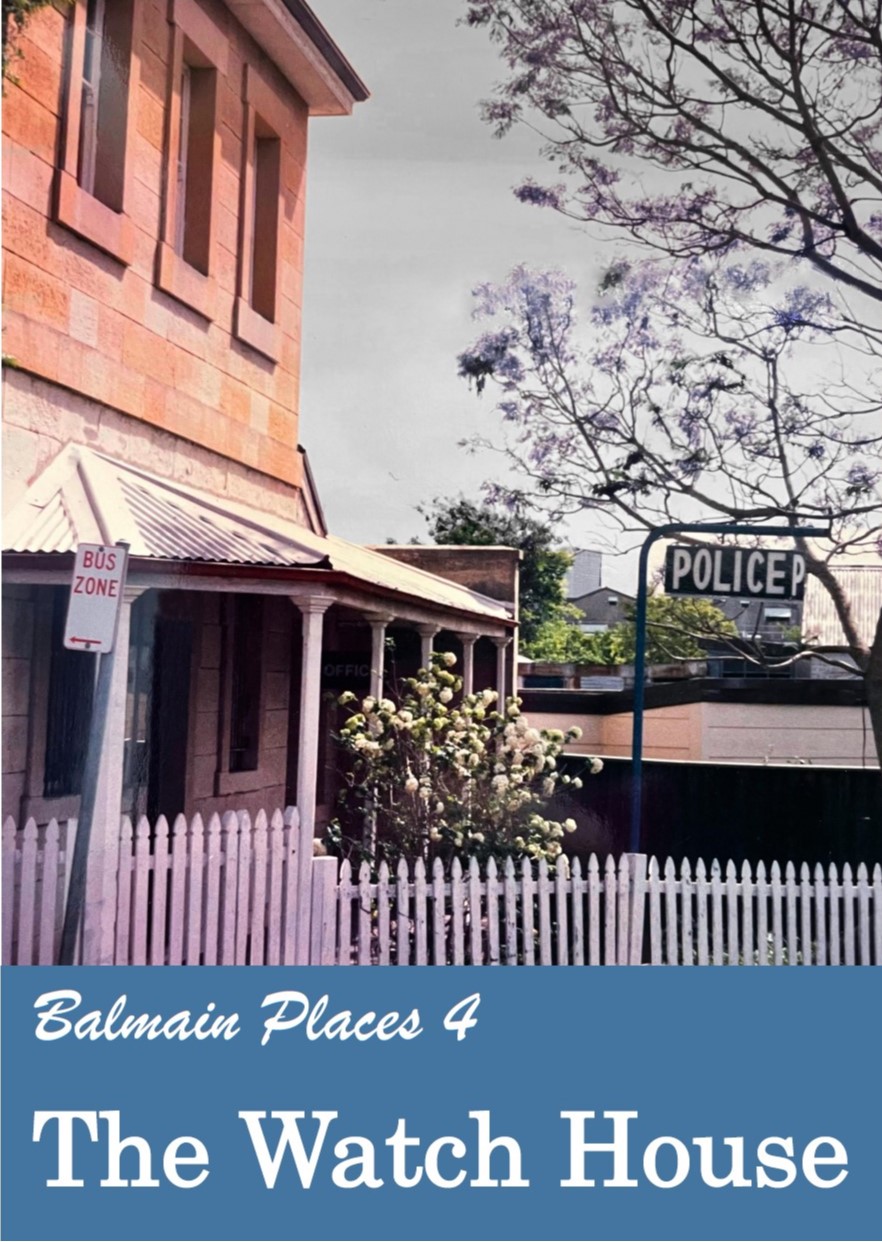
Balmain Places 4
The Watch House
Revised edition Duncan MacAuslan, 2024.
In 1851 resident numbers in Balmain had grown to 1,397 and the settlement along Darling Street was thriving. As the population grew, the community demanded a police force and a gaol.
The Government approved funding of £450 and Edmund Blacket, the Colonial Architect, worked together with the Inspector General of Police to find a suitable site and design. In 1853, Lot 47 of the Waterview Estate was purchased for £240 from Edward Hunt. It was to become the new Balmain Watch House.
This booklet traces the history of The Watch House and the people who have lived there from construction in 1855 through to its present use as the home of the Balmain Association.
Soft cover, A5, 16 pages, 2024 (2nd edition).

Out of print
Balmain to Glebe
Pictorial History
Joan Lawrence and Catherine Warne, 1985.
The once Leichhardt Municipality is composed of Balmain, Birchgrove, Rozelle, Lilyfield, Leichhardt, Annadale and Glebe but each area has its own unique and interesting history.
Once virgin bush and tribal lands to the aborigines, the land was parcelled out in government grants soon after European settlement at Sydney Cove.
This book, richly illustrated, traces the development of the municipality from then to the present day.
Soft cover, 280mm x 210mm, 139 pages, 2009 (3rd edition).
This book is out of print and no longer available to purchase. The BA’s copy may be consulted at the Watch House.

$5.00
+$3.40 postage
Balmain Walks 1
Balmain East
Peter L. Reynolds, 1988.
Revised and redesigned, Duncan MacAuslan, 2022.
This booklet contains three walks around the east end of Balmain – Peacock and Simmons Points walk, Ewenton walk and Mort’s Dock walk.
Each walk contain a map annotated with points of interest with a brief description of each. The walks all begin at the Balmain Watch House, 179 Darling St.
Soft cover, A5 format, 16 pages in colour, 2022 (6th edition).

$5.00
+$3.40 postage
Balmain Walks 2
Birchgrove
Peter L. Reynolds, 1987.
Revised and redesigned, Duncan MacAuslan, 2022.
Three walks offering pleasant parks, interesting buildings and scenic water views.
Long Nose Point Walk Take F8 ferry from Circular Quay to Long Nose Point where the walk begins. The walk ends at the terminus of the 441 bus to York St City.
Ballast Point Walk Take 441 bus from the QVB to the Birchgrove terminus. The walk ends at the corner of Rowntree St and MacQuarie Terrace. Take the 441 bus to York St City.
Elkington Park Walk Take 441 bus from the QVB City to corner of Rowntree St. and MacQuarie Terrace. The walk ends at the corner of Darling and Elliott streets, bus 443 returns to the city.
Soft cover, A5 format, 16 pages in colour, 2022 (2nd edition).
$5.00
+$3.40 postage
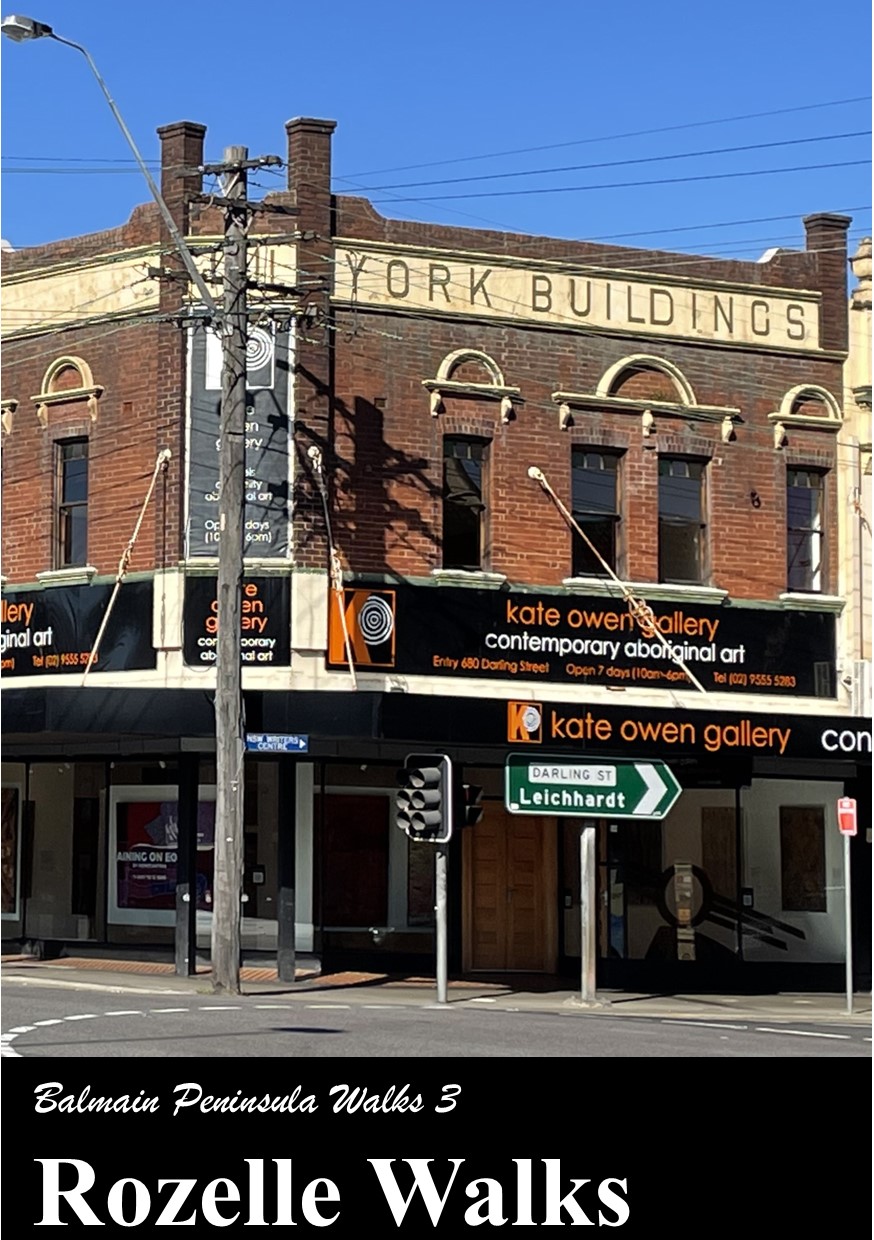
Balmain Walks 3
Rozelle
Peter L. Reynolds, 1996.
Revised and redesigned, Helen Carter and Ross Mackenzie, 2022.
New edition with three new self-guided walks around Rozelle.
1. South side of Victoria Road: Merton Estate Hotel, 38 Victoria Road to Iron Cove Bridge with optional walk in Callan Park.
2. North side of Victoria Road: Rozelle Public School, 663 Darling Street to Terry and Wise Streets.
3. White Bay Power Station, Victoria Road to Bald Rock Hotel, Mansfield Street.
Three new walks with notes Rozelle’s interesting buildings, houses, parks, pubs and industries
Soft cover, A5 format, 20 pages in colour, 2022 (2nd edition).

Marked down $2.00
+$4.80 postage
Balmain: 1800-1882
The Gilchrist Settlement – A Basic Search Plan
Peter L. Reynolds, 1978.
This Basic Search Plan has been compiled with the sole aim of allowing each separate allotment of present-day Balmain land to be seen in the context of its origin, its legal title and its historical development.
While dated and with much more data available on line, this booklet still provides detailed guidance – particularly in the area of Old System Titles.
Many of the searches referred to in this book can now be carried out at Land Registry Services on line.
Additionally, Stephen South’s web site, Land Research NSW, provides a wealth of information.
Marked down owing to deterioration of staples.
Soft cover, A4 format, 20 pages, 1978.

$25.00
+$7.50 postage
Broughton Hall
Brought to Life
Roslyn Burge for Friends of Callan Park, 2018.
Broughton Hall is the name given to the two-storied Georgian House painted white and built in 1842 on a three acre corner of Wharf Road and Church Street Liyfield. By 1878 the Keep family, who owned Broughton Hall, purchased the rest of the property with another fine house known as Kalouan.
Broughton Hall gave its name to the psychiatric clinic established after WW1 and later the day hospital.
This remarkable publication, two decades in the making, provides a detailed history of Broughton Hall from 1840 to the present. A fascinating read with many historic pictures and documents.
Soft cover, A4 format, 52 pages in colour, 2018.
$30.00
+$12.95 postage
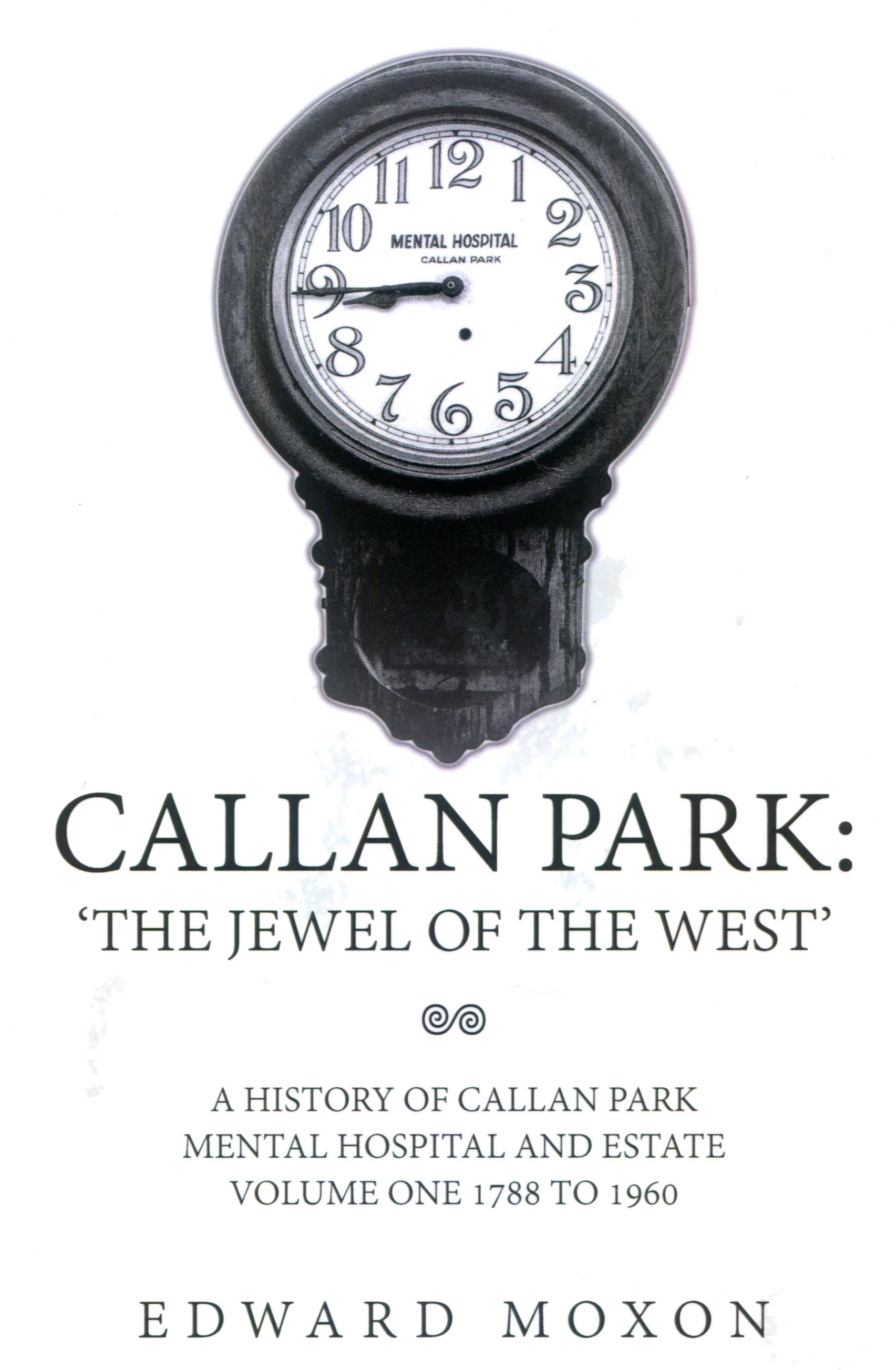
Callan Park: ‘The Jewel of the West’
A History of Callan Park Mental Hospital and Estate.
Volume One: 1788 to 1960.
Edward Moxon, 2022.
This book is a record of events that happened at Callan Park before 1960. It is a journey of discovery that uncovers facts and manoeuvring not published before.
Many internal and external variables shaped the history of Callan Park, Fundamentally, its staff, its patients, the government of the day, charismatic and visionary individuals, technological advances, the economy and the community surrounding the hospital were catalysts in this process.
This book provides a detailed account of the development and intrigues of Callan Park over the period supplemented by many photographs.
Soft cover, 150mm x 230mm, 424 pages, 2022.
$15.00
+$7.50 postage
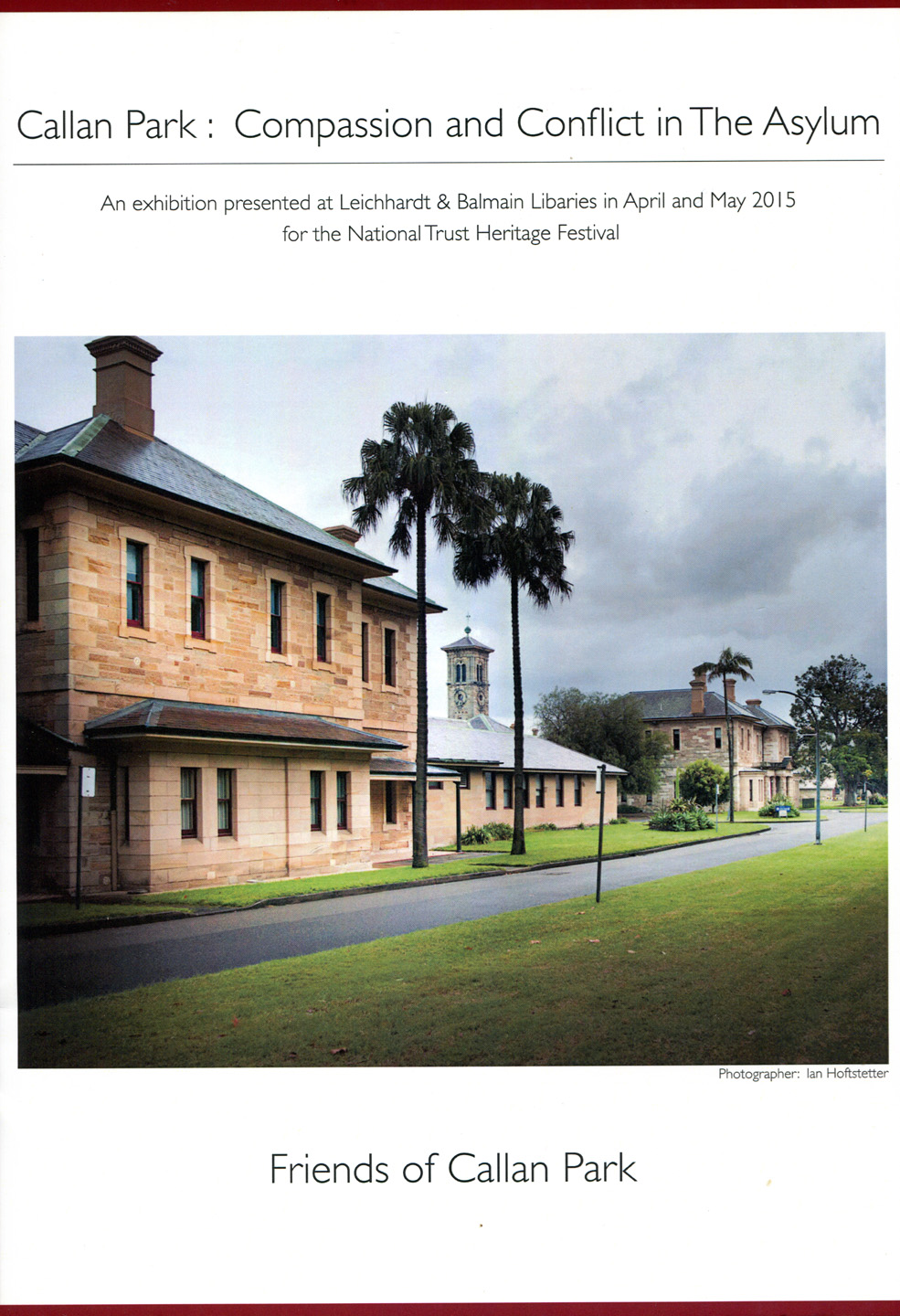
Callan Park: Compassion and Conflict in The Asylum
Friends of Callan Park.
This book is a record of an exhibition presented at Leichhardt and Balmain Libraries in April and May 2015 for the National Trust Heritage Festival.
Thousands of people have passed through the gates of Callan Park a site where history is many layered. There are stories of horror and abuse and stories of respite and care and recovery.
The exhibition highlights the stories of patients in the asylum, staff who worked in the wards, children who grew up within the walls and the broader community who care about Callan Park.
Beautifully illustrated.
Soft cover, 28 Pages, 2018.

Out of print
Called to the Bar
150 years of Pubs in Balmain & Rozelle
Bonnie Davidson, Kathleen Hamey and Debby Nicholls, 1991.
The first hotel in Balmain opened in 1842 to provide refreshment for the occupants of the houses being built on the recently subdivided land, and from that time on, hotels provided a basis for the social and political life of the growing suburb.
At this time licenced hotels were open from 4am to 6pm and were required to have two sitting rooms and two sleeping rooms fit for public accommodation. In 1849 the closing hour was extended to 10pm.
This volume is an attempt to provide a pictorial history of all the hotels which have existed since the first residents moved into the area.
Soft cover, A5 format, 64 Pages, 1991.
This book is out of print and no longer available to purchase. The BA’s copy may be consulted at the Watch House.

$15.00
+$7.50 postage
Douglas Grant
that Black Digger from the Scottish Mob
Tony Griffiths.
This is an account of Douglas Grant’s life.
The author says
“Douglas Grant wasn’t of any special importance in factory activity; it’s just that his name cropped up quite often in newspapers in the inter-war periods – too often for just an ordinary factory worker. He wasn’t a manager or even a foreman or a leading hand, but he was evidently a man of some note, and he was an educated pure aboriginal sometimes intriguingly called “the Black Scotsman”. I decided to explore his life; he seemed an intriguing man”.
As a WW1 ex-serviceman Douglas spent time at Callan Park. In 1931, working with fellow patients, he made his mark by using his professional skills to help design a war memorial based on the arch of the Sydney Harbour Bridge. The memorial was unveiled in August 1931 by the State Governor, Sir Philip Game. Douglas stood beside the Governor for press photographs.
The memorial is still in place in Callan Park.
Douglas had a many and varied career – indeed an intriguing man.
Soft cover, 46 pages, 2015.

$20.00
+$7.50 postage
Down The ‘Olive
A memory of Colgate-Palmolive in Balmain, New South Wales
Written and edited by Else Lackey and Monica Vardabasso.
The Balmain plant is where it all started for Colgate-Palmolive in Australia. In 1923 when the first soap boiling took place, Balmain was a suburb known for its industry, its shipyards and it coal mine.
This small book is not a definitive history of Colgate-Palmolive or the Sydney suburb of Balmain. It is a book of memories of some of the people who worked at Colgate-Palmolive’s first Australian factory. It reflects an important part of Australian history gone forever.
Soft cover, 35 pages.

Sale $10.00
+$7.50 postage
Exploring Leichhardt Heritage
Selected Walks in the Municipality
Compiled by Jeanette Knox on behalf of the Heritage Group of Leichhardt District.
The inner Sydney municipality of Leichhardt incorporates the suburbs of Annandale, Birchgrove, Rozelle, Leichhardt, Lilyfield and, between 1968 and 2003, Glebe.
All these areas were amongst the earliest settlements in the Sydney region and they still retain significant buildings dating back to the 19th century. The walks described in this booklet enable the visitor to observe many of them.
Soft cover, 64 pages, 2010.
$10.00
+$7.50 postage
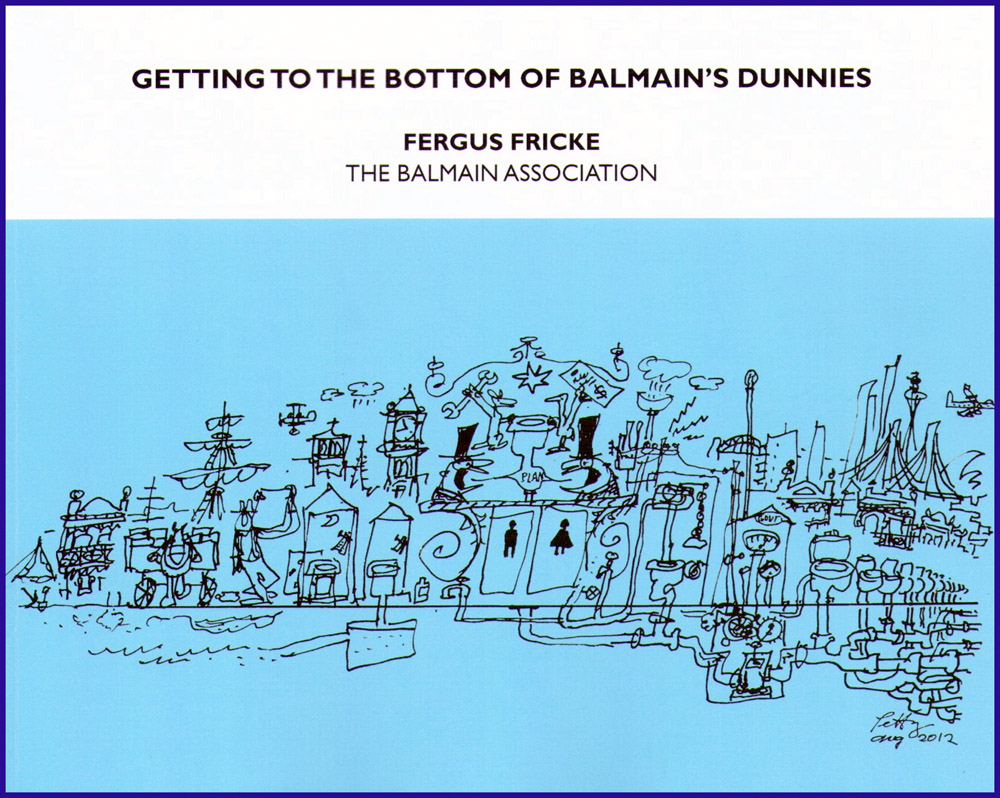
Getting to the Bottom of Balmain’s Dunnies
Fergus Fricke, 2012.
What was life like in Balmain in the 19th century when there was no reticulated water supply and there were no sewers.
This book will never allow you go to the toilet without a passing thought for high infant mortalities, dunnies out the back or nightmen whose bread and butter was what you usually put down the toilet.
The present sanitation system that you take for granted saved Sydney from self-destruction. Learn some defecating history as well as some of the politics of water supply, sewerage and infectious diseases.
The few remaining Balmain dunnies are both an endangered species and a reminder of a critically important part of our history that Getting to the Bottom of Balmain’s Dunnies flushes out.
Soft cover, A5 format, 79 Pages, 2012.

$15.00
+$7.50 postage
Gourlie’s Corner
Growing up in Balmain with Wal Gourlie
Edited by Kathleen and Val Hamey, 1992.
Some years ago Wal Goulie gave the Balmain Association a dozen pages of memories of his boyhood which he titled “Balmain of Old”. With Wal’s permission the material appeared in the Balmain Association’s monthly newsletter, frequently with additional information to update the article.
The resulting column “Gourlies Corner” became one of the publication’s most popular features.
This volume brings together all of the material he provided, together with some of the additional data. It also include for the first time his recollections of his school days.
“Gourlies Corner” was a shop on the corner of Grove and Cove streets Birchgrove.
Soft cover, A5 format, 56 Pages, 2023 (reprinted).
$20.00
+$12.95 postage
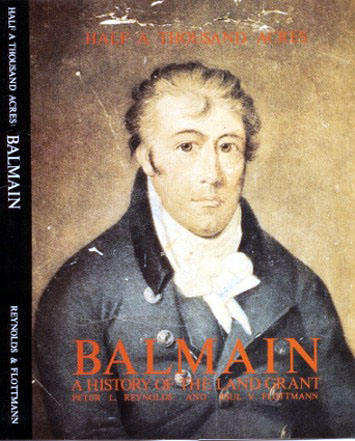
Half a Thousand Acres
A History of the Balmain Land Grant
Peter L. Reynolds and Paul V. Flottmann, 1976.
In this book the lives and times of the two main characters concerned with the Balmain Land Grant, Dr. William Balmain and Professor John Gilchrist emerge from hitherto obscurity and become clearly defined by the authors’ painstaking research.
The real substance of the book, however, lies in the posthumous effect of the two significant legal actions made in their lifetimes; one, the recipient and transfer of “Half a Thousand Acres” and the other, the execution of their wills.
A must-have for anyone with a serious interest in Balmain history.
Limited copies remain.
Hard cover, 190mm x 250mm, 147 pages, 1976.

$15.00
+$7.50 postage
Jack’s Story
Growing up in Balmain
John “Jack” Thomson, 2016.
John Thomson, known to his many friends as Jack, has spent all his life in Balmain. Born in 1927 Jack remembers the days of the Depression, when kind greengrocers put aside “specs”, fruit which had spots on it that they gave to hungry children. As well, Jack’s childhood had it trials.
Soft cover, A5 format, 96 Pages, 2016.

$65.00
+$12.95 postage
Miss Rose Adcock & Her Portable Iron Houses of Snails Bay
Dr. Ray Stevens, 2025.
This important work by local conservation architect Dr. Ray Stevens began with the accidental discovery of a photograph of a curious house in Birchgrove. So the question came to mind, ‘what is this place and how did it come to be here?’
It turns out that the house was one of two originally located on Ballast Point Road, but it had actually been relocated. The two houses were erected by a young woman called Miss Rose Adcock. What circumstances, family relationships and personal character collided to motivate a young unmarried woman, born in Birmingham but living in Paris and aged only 23, to travel to a colonial settlement in Sydney and become an entrepreneurial property speculator and developer?
This story examines the physical and historical information on the pair of portable iron houses, which are likely the rarest examples in the world of portable houses by the maker Edward T. Bellhouse & Co. from Manchester.
Soft cover, A4 format, 334 pages in colour, 2025.

$10.00
+$4.80 postage
On The Pigeon Ground
Balmain Public School 1860-1965
Peter L. Reynolds, 1995.
Balmain Historical Monograph No. 1.
Balmain Public School, by virtue of the chronology of its founding, has a special place in New South Wales’ history – it was one of 259 National Schools opened during the operation of the National System betewen 1848 and 1866.
Developed like many schools in piecemeal fashion, the school had several names, National School (1860), Public School (1866),Superior Public School (1881), Demonstration School (1946), and Public School again (1966).
The school opened in 1860 in rented premises and then moved in 1862 to a permanent building which, when redundant in 1917, was bought by the Roman Catholic Church and is now the Father John Therry School (Eaton Street).
Soft cover, 175mm x 250mm, 56 pages, 1995.
Marked down $10.00
+$7.50 postage
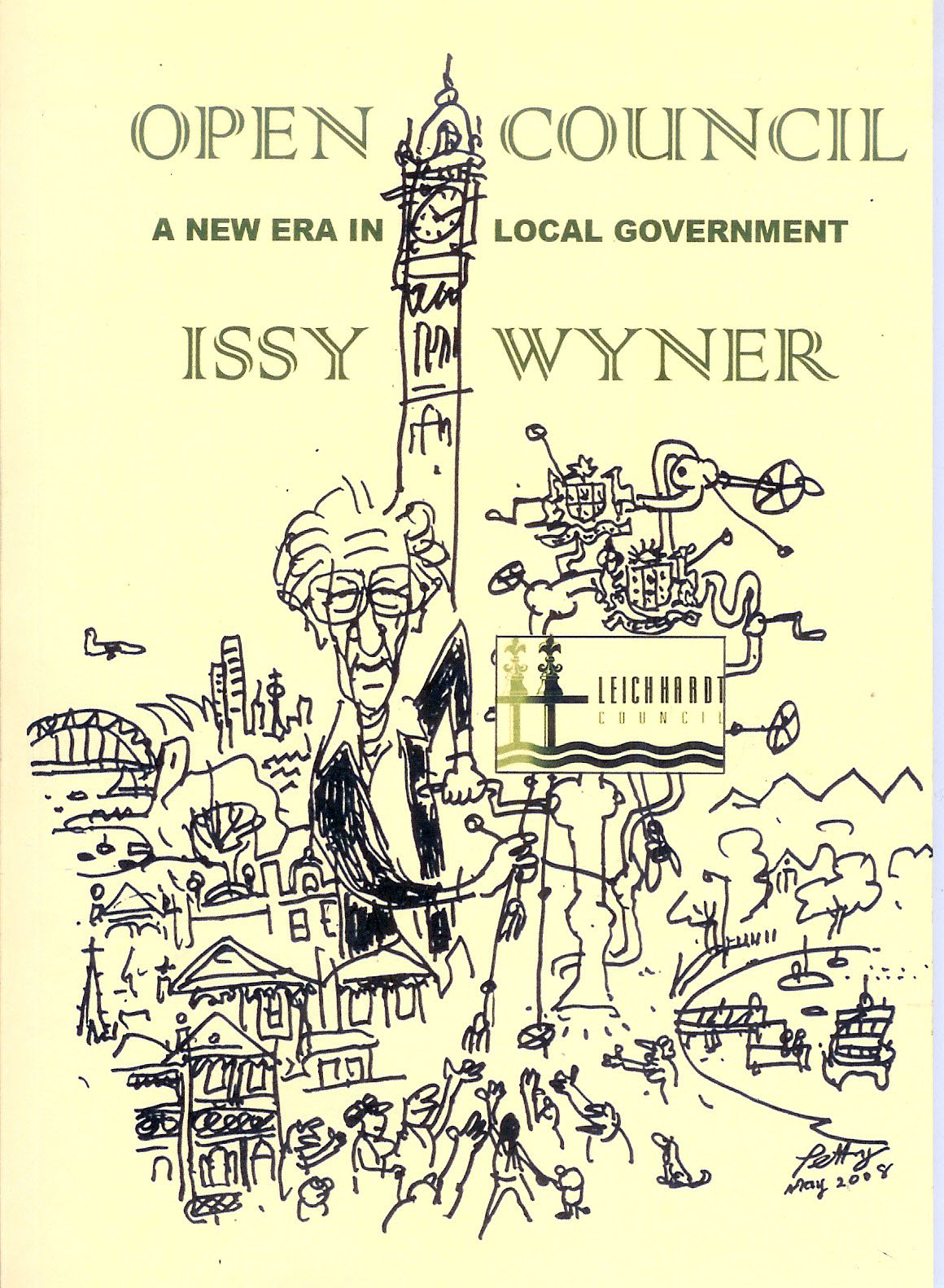
Open Council
A New Era in Local Government
Issy Wyner, 2008.
Edited and foreword by Hall Greenland.
Issy Wyner was probably the best placed person to write an account of Leichhardt Municipality’s experience with Open Council, the pioneering experiment in public participation and open government that was initiated in 1971.
Issy was one of the architects of this new system of local government and was as an Alderman and Councillor from Balmain on Leichhardt Council for 25 years from 1959 through to 1991.
He was also a historian who kept meticulous files on the Council’s activities during those years.
This volume is an edited version of Issy’s original draft which has been placed in the local history section of Leichhardt library, along with his Council papers.
Published by the Balmain Association July 2008.
Marked down owing to minor discolouration of spine.
Soft cover, A5 format, 89 pages, 2008.

$25.00
+$7.50 postage
Streets, Lanes and Places 1836-2017
An index of the origins of the street, park, and waterfront names of Balmain, Birchgrove, and Rozelle
Yvonne “Bonnie” Davidson and Kathleen Hamey, 1994.
Duncan MacAuslan, 2017, fourth edition revised and expanded.
What’s in a name? When it comes to streets, there is a wide variety of options. Back in the early days of Balmain, names became attached to tracks to identify them and some of those names remain.
As Balmain was subdivided, landholders might bestow their family name or that of a family member on a street.
Others are identified with place names in England, Scotland or Ireland. Still others were named for government officials, battles, sportsmen, members of the Royal Family or well known citizens.
Find out the origins of your street name and of all the streets in Balmain, Birchgrove and Rozelle.
Soft cover, A4 format, 75 pages, 2017 (4th edition).

$30.00
+$12.95 postage
Sydney’s Hard Rock Story
The cultural heritage of trachyte
Robert Irving, Ron Powell and Noel Irving, 2014.
What is trachyte and how did it come to be the unsung hero of Sydney’s building stones?
The answer is found in this fascinating story of how a hard stone quarried in the New South Wales Southern Highlands became the city’s most important stone after sandstone.
The title provides an apt description: trachyte was Sydney’s hard rock. Sandstone with all its virtues was the premier building stone of Sydney’s early and middle years but trachyte had qualities sandstone lacked and so it perfectly complemented the ‘yellowblock’ of our heritage buildings. Sydney’s hard rock provided what sandstone, with all its beauty, could not provide.
This tough, distinctively coloured igneous stone was first quarried at Mount Gibraltar near Bowral in the 1880s and soon began appearing in the kerbs and gutters along the growing city’s streets. Soon it was adopted by builders and architects and it can still be seen overhead in the keystones of great buildings as well as underfoot, in myriad small and large scale projects throughout New South Wales and beyond. Its importance in the city is why the authors have called their tale Sydney’s Hard Rock Story.
The book is handsomely illustrated throughout and contains 245 illustrations including 25 colour photographs. It traces trachyte’s extensive uses, starting with its geology and some of the dramas of Bowral’s ‘Gib’ and its quarrymen. It continues by examining its basic, utilitarian beginnings like kerbing. After designers were awakened to its qualities they used trachyte to create some of Sydney’s finest commercial streetscapes, as well as monuments, foundation stones, commemorative plaques and paving.
A special feature of the book, showcasing many fine and surprising examples of this special stone, is the illustrated trachyte walk in central Sydney.
Soft cover, 210mm x 265mm, 196 Pages, 2014.

Out of print
William Balmain and John Gilchrist
Family and Property
Peter Reynolds.
This book traces the family and property of Dr. William Balmain and Prof. John Borthwick Gilchrist and their connection.
This book is out of print and no longer available to purchase. The BA’s copy may be consulted at the Watch House.